Plaintive Quotes

And I often dream of chemistry at night, dreams that conflate the past and the present, the grid of the periodic table transformed to the grid of Manhattan. [...] Sometimes, too, I dream of the indecipherable language of tin (a confused memory, perhaps, of its plaintive "cry”). But my favorite dream is of going to the opera (I am Hafnium), sharing a box at the Met with the other heavy transition metals-my old and valued friends-Tantalum, Rhenium, Osmium, Iridium, Platinum, Gold, and Tungsten.

Oliver Sacks
We were outside. The icy wind whipped my face. I was constantly biting my lips so that they wouldn't freeze. All around me, what appeared to be a dance of death. My head was reeling. I was walking through a cemetery. Among the stiffened corpses, there were logs of wood. Not a sound of distress, not a plaintive cry, nothing but mass agony and silence. Nobody asked anyone for help. One died because one had to. No point in making trouble.
Elie Wiesel
While he and his idol, Hank Williams, have both affected generations with a plaintive veracity of voice that has set them apart, Jones has an additional gift-a voice of exceptional range, natural elegance, and lucent tone. Gliding toward high tenor, plunging toward deep bass, the magisterial portamento of his onward-coursing baritone emits white-hot sparks and torrents of blue, investing his poison love songs with a tragic gravity and inflaming his celebrations of the honky-tonk ethos with the hellfire of abandon.
George Jones
Pesotsky had an immense house with columns and lions, off which the stucco was peeling, and with a footman in swallow-tails at the entrance. The old park, laid out in the English style, gloomy and severe, stretched for almost three-quarters of a mile to the river, and there ended in a steep, precipitous clay bank, where pines grew with bare roots that looked like shaggy paws; the water shone below with an unfriendly gleam, and the peewits flew up with a plaintive cry, and there one always felt that one must sit down and write a ballad.
Anton Chekhov
Rohde became more and more firmly bound to the bourgeois world, its institutions and accepted opinions. ... The contrast between the two natures makes Rohde and Nietzsche exemplary representatives of two distinctive worlds. In their youth they both live in the realm of boundless possibilities and feel an affinity through the exuberance of their noble aspirations. Subsequently they go in opposite directions. Nietzsche remains young, leaving concrete reality as his task assumes existential import. Rohde grows old, bourgeois, stable, and skeptical. Hence courage is a fundamental trait in Nietzsche, plaintive self-irony in Rohde. ... Rohde retained the interests but not the attitudes of his youth; he looked to the world of the Greeks for the object of his contemplation rather than the norm of obligation.
Karl Jaspers
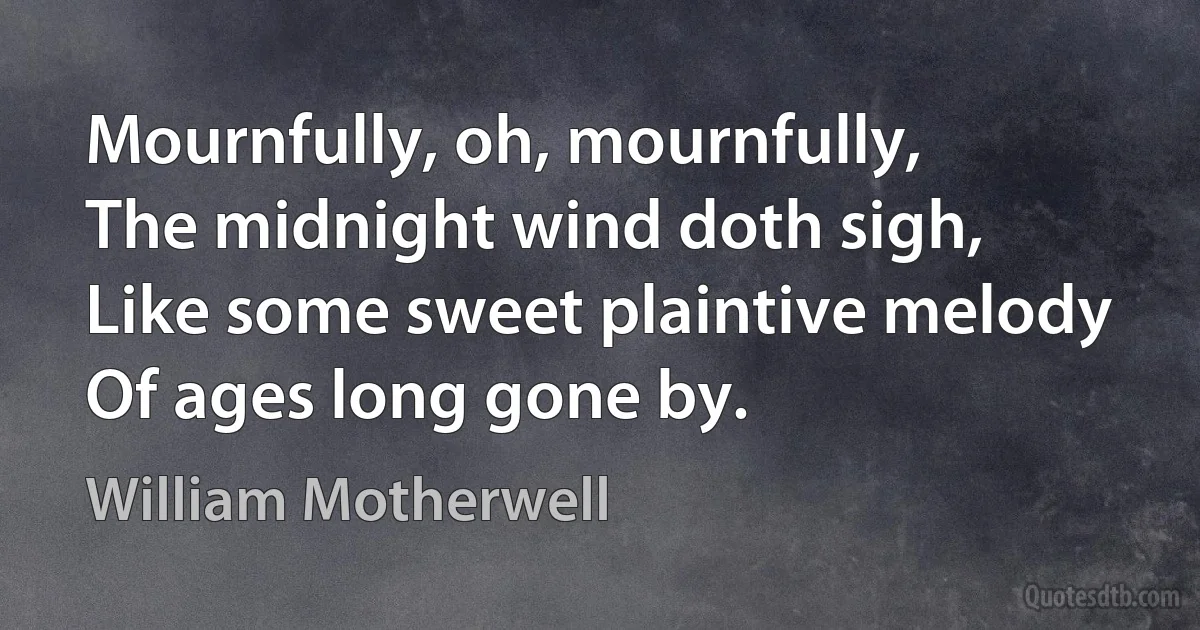
Byron! how sweetly sad thy melody!
Attuning still the soul to tenderness,
As if soft Pity, with unusual stress,
Had touched her plaintive lute, and thou, being by,
Hadst caught the tones, nor suffered them to die.
O'ershading sorrow doth not make thee less
Delightful: thou thy griefs dost dress
With a bright halo, shining beamily,
As when a cloud a golden moon doth veil,
Its sides are tinged with a resplendent glow,
Through the dark robe oft amber rays prevail,
And like fair veins in sable marble flow;
Still warble, dying swan! still tell the tale,
The enchanting tale, the tale of pleasing woe.
John Keats