Unfree Quotes

If the image was sketched onto the canvas and spontaneously drawn, colour would often be restrained and unfree... The most important and the most difficult liberation process we went trough, the one that has distinguished our art, was the freeing of colour, the transition to a painterly spontaneity.

Asger Jorn
I was never in the army - I never had a uniform - I was never a soldier. I detest uniforms because they make one unfree. There is an old quotation that goes something like this: 'Your mind will be trained well, but confined to Spanish boots.' That quotation is very apt. It signifies how narrow the military mind becomes.
Hjalmar Schacht
History does not tend to the better, Doc, it does not, it does not. We imagine so because events have produced our glorious selves. Think, however. Put aside the romantic legends and look at the facts. The average Frenchman in 1800 was no more unfree than the average Englishman. The French Empire could have brought Europe together, and could have been liberalized from within, and there might have been no World War I in which Western civilization cut its own throat. Because that's what's happened, you know. We're still busy bleeding to death, but we haven't far to go now.
Poul Anderson
The latter-day outcome of this evolution of an archaic institution, the wife, who was at the outset the drudge and chattel of the man... has become the ceremonial consumer of goods which he produces. But she still quite unmistakably remains his chattel in theory; for the habitual rendering of vicarious leisure and consumption is the abiding mark of the unfree servant.
Thorstein Veblen
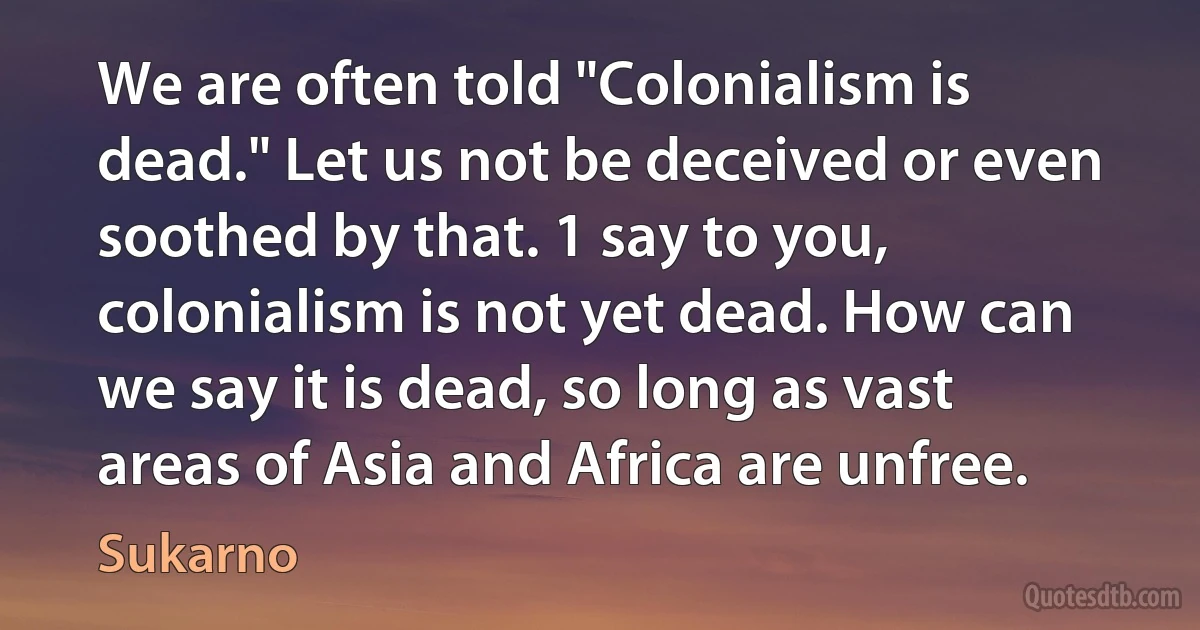
There is but one way to commemorate the Emancipation Proclamation. That is to make its declarations of freedom real; to reach back to the origins of our nation when our message of equality electrified an unfree world, and reaffirm democracy by deeds as bold and daring as the issuance of the Emancipation Proclamation.
Martin Luther King Jr.
In the human reality, all existence that spends itself in procuring the prerequisites of existence is thus an "untrue” and unfree existence. Obviously this reflects the not at all ontological condition of a society based on the proposition that freedom is incompatible with the activity of procuring the necessities of life, that this activity is the "natural” function of a specific class, and that cognition of the truth and true existence imply freedom from the entire dimension of such activity. ... Society still is organized in such a way that procuring the necessities of life constitutes the full-time and life-long occupation of specific social classes, which are therefore unfree and prevented from a human existence. In this sense, the classical proposition according to which truth is incompatible with enslavement by socially necessary labor is still valid.
Herbert Marcuse
If the State, modeled after the universe, is split into two spheres or classes of beings – wherein the free represent the ideas and the unfree the concrete and sensate things – then the ultimate and uppermost order remains unrealized by both. By using sensate things as tools or organs, the ideas obtain a direct relationship to the apparitions and enter into them as souls. God, however, as identity of the highest order, remains above all reality and eternally has merely an indirect relationship. If then in the higher moral order the State represents a second nature, then the divine can never have anything other than an indirect relationship to it, never can it bear any real relationship to it, and religion, if it seeks to preserve itself in unscathed pure ideality, can therefore never exist – even in the most perfect State – other than esoterically in the form of mystery cults.
Friedrich Schelling
If human beings can simply decide on what they want to do and then do it, then forecasting is impossible. Free will is beyond forecasting. But what is most interesting about humans is how unfree they are. It is possible for people today to have ten children, but hardly anyone does. We are deeply constrained in what we do by the time and place in which we live.
George Friedman
The bourgeois ... necessarily regards all behaviour that bursts ‘spontaneously' forth from the individual ignorant of its causality, as above all free. Therefore the instincts are conceived as freely striving for unconscious goals, and psychology becomes the adventures of the free instincts in their struggles against the restraints of the environment (in Freud, of society) which impede and cripple their freedom. Out of this struggle cognitive and emotional consciousness is born.Now the only objection to this bourgeois psychology is that it inverts the picture. The instincts are not free springs of connation towards a goal. They are, so far as they can be abstractly separated, unconscious necessities, as Kant realised. They are unfree.
Christopher Caudwell
Hayek ripped G. W. F. Hegel in The Counter-Revolution of Science's third part for his "historicism”-the idea, in Hayek's terminology, that history moves in set and predictable stages. He considered this idea fatally flawed and societies that were based on it to be unsuccessful, unproductive, and unfree. Historicism denies free will. The future is what we make of it.
Alan O. Ebenstein
Where laws rule, people are free. Conversely, where not laws, but individuals, rule, people are unfree. Law is the indispensable tool for securing personal freedom, because only under the rule of law are individuals able to plan their lives according to known expectations about the social order.
Alan O. Ebenstein
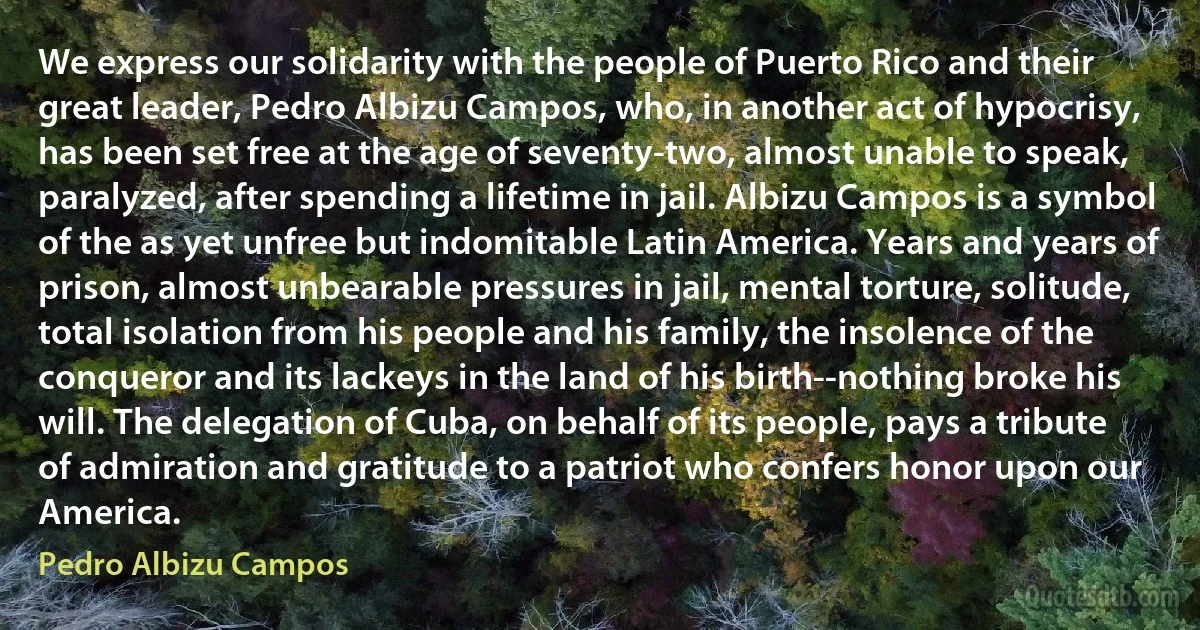
Mystics like Saint Bernard, Saint Francis, Saint Bonaventure or Pascal had a right to make this objection, since they got into the Church, so to speak, by breaking through the windows; but society at large accepted and retains Saint Thomas's Man much as Saint Thomas delivered him to the government; a two-sided being, free or unfree, responsible or irresponsible, an energy or a victim of energy, moved by choice or moved by compulsion, as the interests of society seemed for the moment to need.
Henry Adams
Everywhere we remain unfree and chained to technology, whether we passionately affirm or deny it. But we are delivered over to it in the worst possible way when we regard it as something neutral; for this conception of it, to which today we particularly like to do homage, makes us utterly blind to the essence of technology.
Martin Heidegger